Ground That Supports Structures Without Settling
Site Preparation & Building Pads in Havelock for new construction where foundation stability depends on properly compacted and graded soil
When soil beneath a building pad is not compacted in controlled lifts, the structure settles unevenly as the ground compresses under load, causing foundation cracks and door frames that no longer close square. Dirt Workz provides site preparation and building pad construction in Havelock for residential homes, outbuildings, shops, and agricultural structures where the foundation must sit on engineered fill rather than undisturbed but uneven native ground. You need this service when building on sloped terrain, when replacing unsuitable topsoil with structural fill, or when raising the pad above surrounding grade to manage drainage.
The process involves stripping organic topsoil, excavating to the required depth, and building the pad in compacted layers of select fill material. Each lift is compacted with a vibrating roller or plate compactor before the next layer is added, ensuring uniform density that will not compress further once the structure is built.
Arrange an on-site consultation to review pad dimensions, elevation requirements, and soil conditions for your building project.
Why Soil Compaction Prevents Foundation Problems
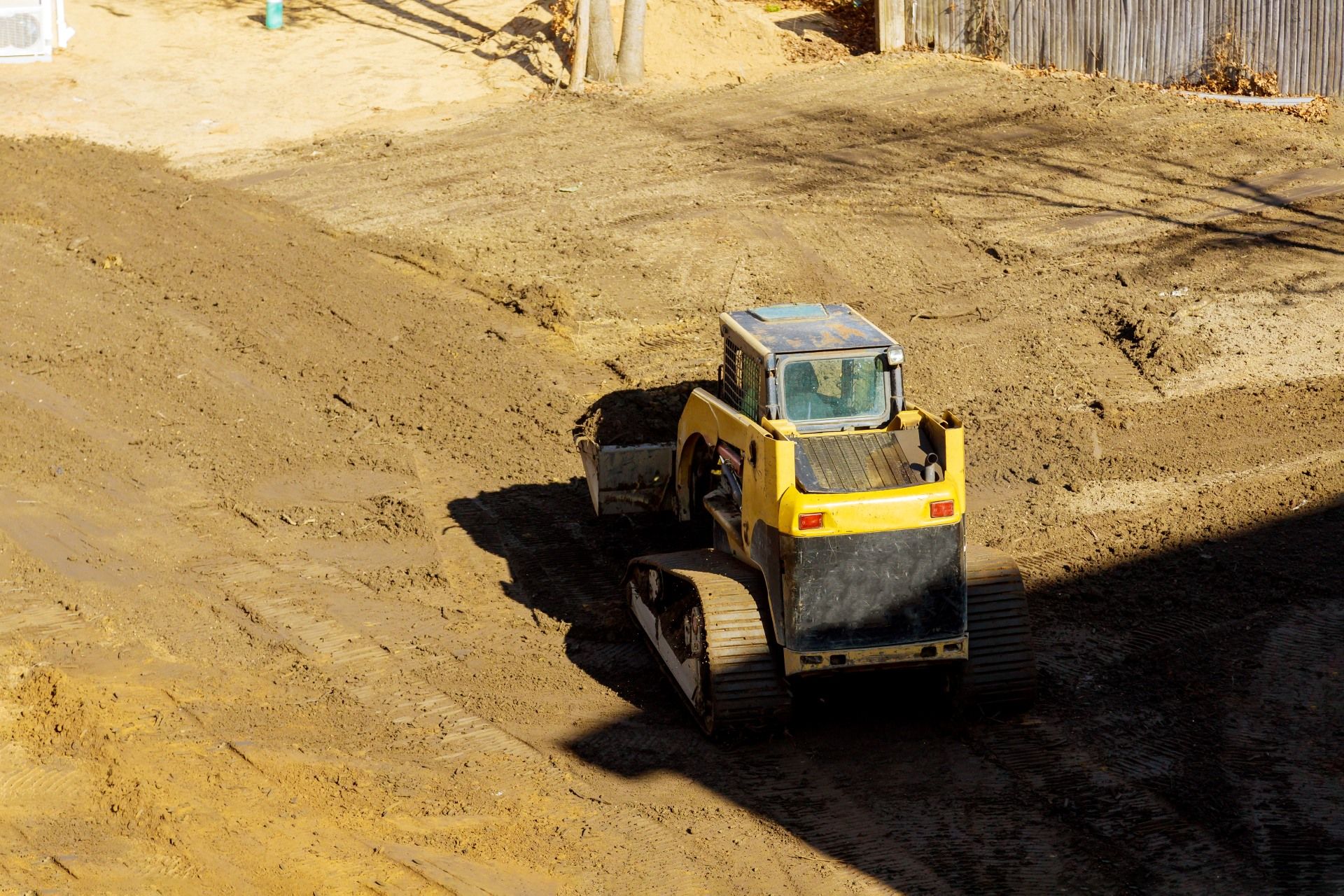
Compaction eliminates air voids between soil particles, creating a dense, stable base that distributes structural weight evenly across the pad surface. Without proper compaction, the soil beneath footings compresses gradually under load, and because this compression happens unevenly depending on soil type and moisture content, the foundation settles more on one side than the other. Cracks appear where the structure bends to follow the uneven support beneath it.
After the building pad is finished, the surface sits level within tolerances required for foundation forms, and the surrounding grade slopes away to direct runoff. You will notice the pad surface is firm enough to support concrete trucks and construction equipment without rutting, and perimeter edges are defined clearly so forms can be set without guesswork about final elevation.
Pad construction includes final grading to specified elevations, but it does not include utility trenching or concrete work. Those trades follow once the pad is certified ready, and any trenching that cuts through the compacted pad must be backfilled and re-compacted to maintain structural integrity.
Answers to Frequent Service Questions
Clients preparing for construction typically ask about the relationship between pad quality and long-term building performance.
What is the difference between a building pad and rough grading?
A building pad is constructed to specific elevations and compaction standards required for foundation support, with controlled fill material placed in measured lifts. Rough grading simply reshapes existing soil without the compaction or precision needed to prevent settling under structural loads.
How does soil type in Havelock affect compaction requirements?
Iowa clay compacts well when moisture content is controlled, but it becomes plastic and unworkable when too wet or powdery and unstable when too dry. Compaction is typically scheduled when soil moisture is near optimum, which allows particles to lock together under mechanical pressure.
What happens if the pad is not built high enough above surrounding grade?
Water will pond against the foundation or flow toward the structure during heavy rain, increasing hydrostatic pressure against basement walls and creating conditions for seepage. Pads are typically raised at least several inches above finish grade to ensure positive drainage away from the building.
Can a pad be built during wet weather?
Limited progress is possible during dry breaks, but compacting saturated clay is ineffective because water prevents particle-to-particle contact. Most pad work in the region is scheduled during extended dry periods to avoid delays and ensure proper density.
How long after pad completion can foundation work begin?
Immediately, if the pad passes final grade check and compaction testing. The purpose of controlled compaction is to eliminate future settling, so the surface is stable as soon as the final lift is compacted and graded to specification.
Dirt Workz builds house pads, shop pads, and foundation-ready building sites for construction projects where soil stability is critical. Contact our office to discuss pad dimensions, site access, and soil testing requirements for your planned structure.